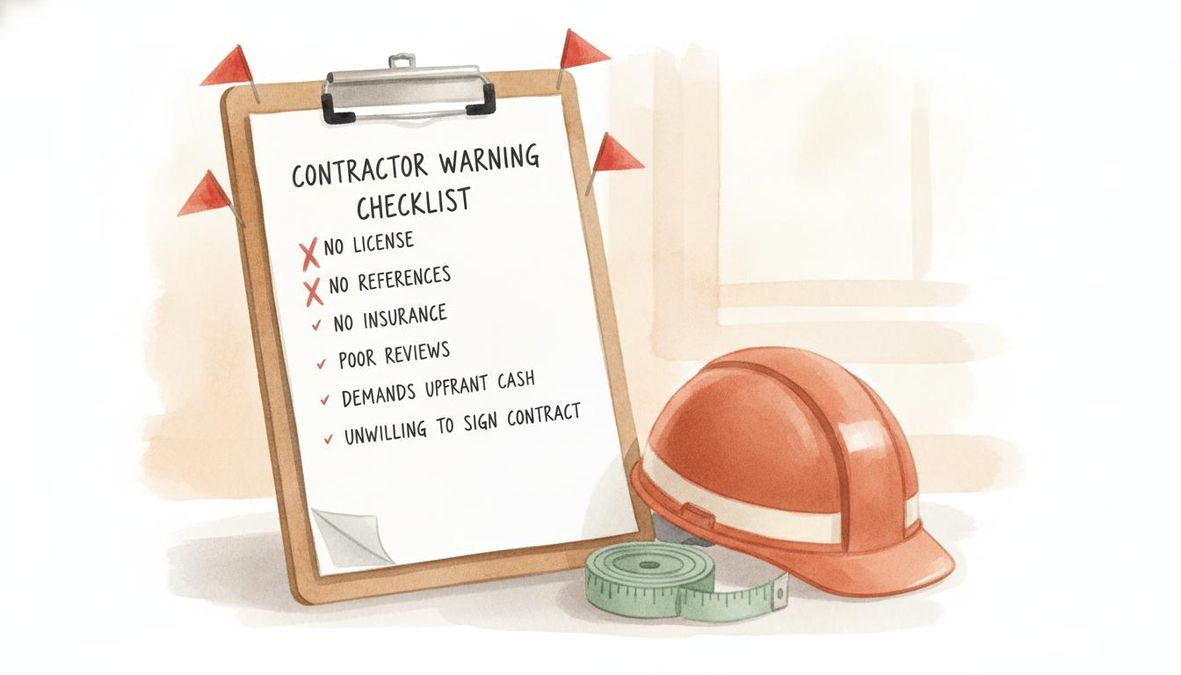
The best time to spot a bad contractor is before you hire them. The second-best time is the moment you see the first warning sign — not three weeks later when problems have multiplied. This guide covers the eight most common red flags, how to verify your suspicions, and what to do if you’re already in a project that’s going sideways.
If you haven’t hired a contractor yet, read this alongside our guide on how to choose a kitchen contractor for a complete vetting system. For project planning help, see our kitchen remodel checklist and kitchen remodel timeline.
Red Flag #1: Demands More Than 30% Upfront
A contractor who wants 50% or more before swinging a hammer is either undercapitalized or planning to use your money to finish someone else’s job. Standard practice is 10% at contract signing (the legal maximum in many states), with subsequent payments tied to milestones.
What it signals: Cash flow problems, potential pyramid scheme financing (using your deposit to pay for the previous client’s materials), or outright fraud in extreme cases.
How to verify: Ask why they need such a large deposit. A legitimate reason might exist for custom-ordered materials requiring a manufacturer deposit — but even then, 30% is a hard ceiling. Anything beyond that is a red line.
What to do: Negotiate a milestone-based payment schedule. If they refuse, walk away. No exceptions.
Red Flag #2: No Written Contract
A contractor who works on a handshake or provides a one-page proposal with vague language isn’t running a professional business. Verbal agreements are unenforceable. A proper contract protects both parties by documenting scope, pricing, timeline, and dispute resolution.
What it signals: Either inexperience (they don’t know what should be in a contract) or intentional opacity (they want wiggle room to change terms later).
How to verify: Ask for a sample contract before you commit. A professional contractor has one ready and is happy to share it. If they hesitate or say “we don’t do formal contracts,” that’s definitive.
What to do: Never start work without a detailed written contract. If a contractor won’t provide one, find one who will. There are plenty of qualified contractors who operate professionally.
Red Flag #3: Can’t Prove License and Insurance
Every legitimate contractor carries general liability insurance and workers’ compensation. Every state requires contractor licensing (though specifics vary). A contractor who “can’t find” their insurance certificate or has a “lapsed” license is either sloppy or hiding something.
What it signals: Unlicensed operation, expired coverage, subcontracting to unlicensed workers, or previous claims that made insurance difficult to obtain.
How to verify: Check your state’s contractor licensing board website — most have free online lookup. Request insurance certificates directly from the insurance carrier (not the contractor). This takes 48 hours and eliminates fraud.
What to do: If license or insurance checks fail, stop immediately. Don’t accept promises to “get it renewed next week.” A contractor who let their license or insurance lapse before your project won’t prioritize fixing it during your project.
Red Flag #4: Bid Is Dramatically Lower Than Others
If three quotes come in at $38,000, $42,000, and $45,000, and a fourth contractor bids $24,000, something is wrong. They’re either missing major scope items, planning to use inferior materials, underpaying workers (which affects quality), or planning to make up the difference with change orders.
What it signals: Desperation for work (which raises questions about why they’re desperate), lack of experience estimating, or a bait-and-switch strategy where the low bid gets them in the door and change orders inflate the final price.
How to verify: Ask the low bidder to walk you through their estimate line by line. Compare it against the detailed quotes from other contractors. Ask what materials and brands they specified. Ask what they’ve excluded that others included.
What to do: Get clarity, but don’t hire them. The $14,000 you “save” upfront typically costs $20,000+ in change orders, redo work, and stress. Low bids are the most expensive bids in the long run.
Red Flag #5: Poor or Slow Communication in the Sales Process
If a contractor takes three days to return your initial call, what happens when your sink is disconnected and you have a plumbing emergency? Communication during the sales process is a preview of communication during the project.
What it signals: Overcommitment (too many jobs at once), disorganization, or a communication style that fundamentally doesn’t match yours.
How to verify: Track response times during your initial interactions. Note whether they answer your specific questions or give vague responses. Pay attention to whether they show up on time for appointments.
What to do: Set clear communication expectations before signing. If they agree to daily updates and weekly check-ins but miss the first one, address it immediately. Poor communication is a fixable problem — if the contractor acknowledges it and corrects. If they dismiss your concerns, consider it a preview of the entire project.
Red Flag #6: Only Perfect Reviews or No Verifiable References
A contractor with exclusively 5-star reviews on every platform has either done very few projects, aggressively manages their online reputation (sometimes by pressuring unhappy clients), or is somehow immune to the occasional misunderstanding. None of these explanations is fully reassuring.
What it signals: Cherry-picked references, review manipulation, or insufficient track record to have encountered challenges.
How to verify: Ask for references from their last five projects — not their best five. Look for how they respond to negative reviews online. A contractor who addresses criticism professionally and offers to make things right demonstrates accountability. One who attacks reviewers or claims every negative review is “fake” is concerning.
What to do: Ask for the last three projects specifically. Contact those references and ask about problems — every project has them. What matters is how the contractor handled them.
Red Flag #7: Pushes to Start Immediately or Skip Permits
A contractor who pressures you to “get started this week before I’m booked” or suggests skipping permits to “save time and money” is creating risk for you, not for them.
What it signals: They may be trying to lock you in before you get other quotes. Skipping permits saves them the hassle of inspections but exposes you to fines, failed home sales, insurance claim denials, and potentially dangerous work that no inspector reviewed.
How to verify: Check permit requirements yourself with your local building department. Most kitchen remodels involving electrical, plumbing, or structural changes require permits. Cosmetic-only work (cabinet replacement without plumbing moves, countertop swap) sometimes doesn’t. Know the rules yourself.
What to do: Never skip required permits. The “savings” of $500–$2,000 in permit costs can cost you $10,000+ when an unpermitted addition is discovered during a home sale and must be brought to code retroactively. A contractor who suggests permit-skipping is not looking out for your interests.
Red Flag #8: Asks You to Pull Permits Yourself
When a contractor asks the homeowner to pull permits, it’s often because they can’t — they’re unlicensed, their license is suspended, or they’ve had issues with the local building department.
What it signals: Licensing problems, a bad relationship with inspectors (which suggests previous code violations), or simply an unlicensed operator trying to use your homeowner status to bypass requirements.
How to verify: Ask why they want you to pull permits instead of doing it themselves. A legitimate reason is rare — some jurisdictions allow homeowners to act as their own general contractor, but this shifts liability to you and is unusual for a professional operation.
What to do: A licensed contractor pulls their own permits. Full stop. If they ask you to do it, ask more questions. If the answers don’t satisfy you, find a contractor who operates above board.
What to Do If You’re Mid-Project With a Problematic Contractor
Sometimes red flags appear after work has started. Here’s how to protect yourself when problems surface mid-project:
Document Everything
From the moment problems arise, create a written record. Save all emails and texts. Take dated photos of work quality issues. Note verbal conversations in a project journal with dates and summaries. This documentation is your evidence if disputes escalate.
Know Your Contract Rights
Review your contract for dispute resolution procedures, termination clauses, and payment terms. Most contracts specify notice periods and cure periods — you must give the contractor written notice of problems and a reasonable time to fix them before taking further action.
Withhold Payment Strategically
Don’t pay ahead of completed work. If work is substandard, document the issues and withhold the payment tied to that milestone until corrections are made. Never withhold payment for work that was completed satisfactorily — that violates your contract and weakens your position.
Escalate Professionally
Address problems directly and calmly with your contractor first. Many issues resolve with clear communication. Escalate to the contractor’s supervisor or business owner if a crew member is the problem. If direct communication fails, consider mediation before litigation.
Know When to Stop Work
If the contractor is creating safety hazards (exposed electrical, unsupported structural elements, gas leaks), you have the right to stop work immediately and call in a licensed professional to assess the situation. Contact your local building inspector if you believe code violations are occurring.
File Complaints If Necessary
If you can’t resolve the dispute directly:
- State contractor licensing board: File a complaint that can trigger an investigation and potential license suspension
- Better Business Bureau: Creates a public record of the dispute
- Small claims court: For disputes under your state’s limit (typically $5,000–$15,000)
- Construction attorney: For larger disputes involving significant financial damages
Protect Against Liens
If you terminate a contractor, subcontractors or material suppliers who weren’t paid by your contractor can place a mechanic’s lien on your home — even if you already paid the contractor in full. This is why lien waivers are critical. If you’re in a dispute, consider placing final payment in escrow until lien waivers are secured.