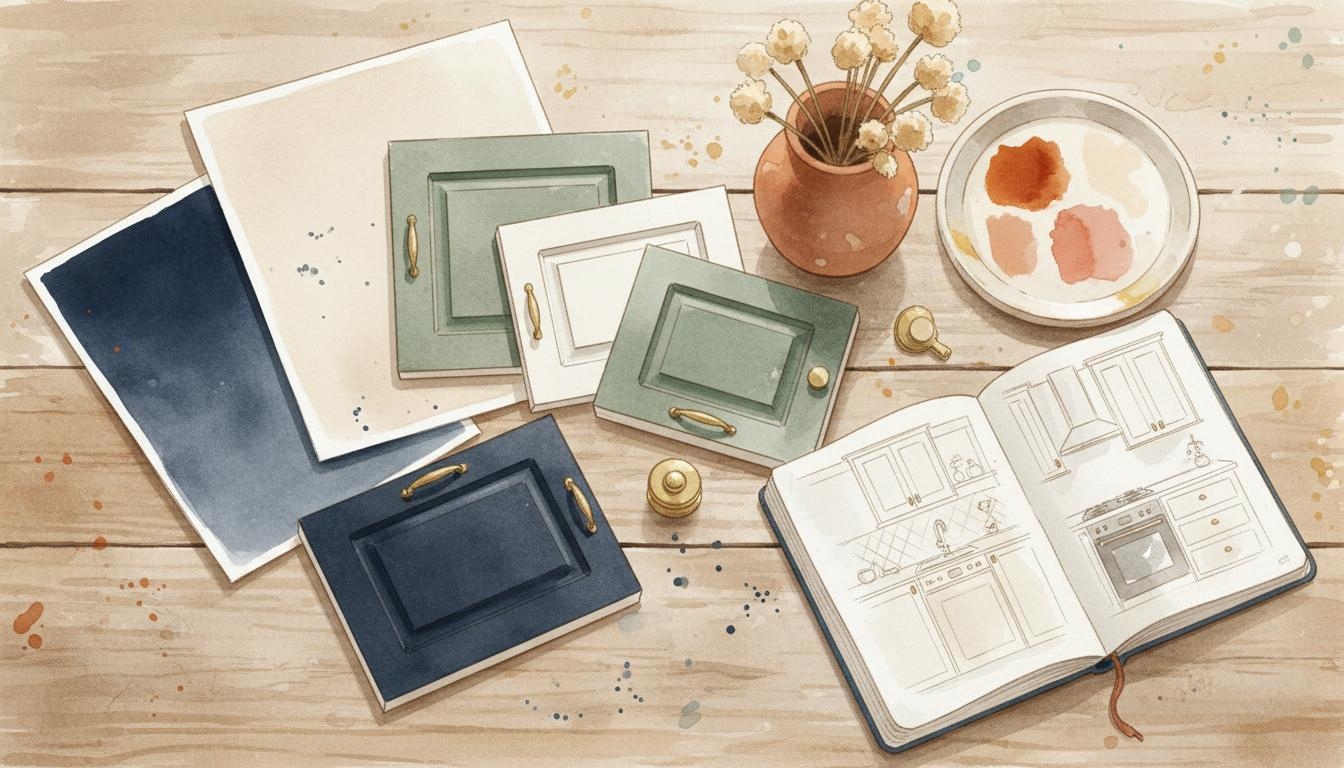
Nothing changes a kitchen’s look faster than a new kitchen cabinet color. Swapping out paint costs a fraction of a full remodel — yet it reshapes how the entire room feels to you and to future buyers. If you are preparing to sell in the next few years, color choice becomes a strategic decision, not just a style one.
Homeowners spent an estimated $25 billion on cabinet refacing and repainting in mid-2026, according to industry trade reports. Most of those dollars went toward shades proven to hold broad appeal. This guide cuts through Pinterest overload and gives you twelve tested combinations, each with real paint codes, countertop pairings, and honest notes on how each plays with buyers.
Before you commit, it helps to understand what cabinets cost in your area. See our guide on kitchen cabinet cost for current material and labor ranges. If you plan to paint yourself, our step-by-step guide to how to paint kitchen cabinets covers prep, primer, and long-lasting finishes.
Where Kitchen Cabinet Color Trends Stand in 2026
White cabinets still commanded roughly 32% of new installs last year, according to data tracked by the National Kitchen and Bath Association. That share is slowly shrinking — down from nearly 40% five years ago — but white remains the safe bet for resale.
Two-tone kitchens, usually a darker island against lighter perimeter cabinets, jumped to 18% of remodels. Deep blues, greens, and warm grays ate into white’s dominance, especially in suburban markets where buyers want personality without risk. Terracotta and butter yellow made smaller inroads, mostly in Sun Belt regions and transitional-style homes.
Designers we follow see one clear pattern: buyers reward kitchens that look finished and intentional. A bold color with poor pairing looks like a gamble. The same color matched to the right countertop and hardware reads as curated. The twelve combinations below are sorted by risk level and organized into four categories.
Classic Neutrals: The Resale Workhorses
These four shades account for over half the cabinet market. They appeal to the widest buyer pool and photograph well for listings. If you plan to sell within three years, start here.
Affiliate disclosure: We may earn a commission when you buy through links to paint retailers on this page. This never affects which colors we recommend — picks are based on resale data, designer trends, and real-world durability.
True White — Benjamin Moore Chantilly Lace OC-65
Crisp, clean, and slightly cool without going sterile. Chantilly Lace has replaced older whites like Decorator’s White in many designer specifications because it pairs cleanly with both warm and cool palettes.
- Countertop match: White quartz with faint gray veining, such as Cambria Brittanicca or MSI Calacatta Laza
- Resale note: Highest broad appeal. Reads as move-in ready to nearly every buyer demographic.
Off-White — Sherwin-Williams Alabaster SW 7008
Alabaster carries enough warmth to soften a kitchen without drifting into cream territory. It works especially well in homes with oak or hickory flooring that you do not plan to replace.
- Countertop match: Warm marble-look quartz or honed Taj Mahal quartzite
- Resale note: Slightly warmer than pure white. Appeals to buyers who find stark whites too clinical.
Light Gray — Benjamin Moore Stonington Gray HC-170
A chameleon shade that shifts depending on natural light. In north-facing kitchens it reads cool and modern; in south-facing rooms it warms up significantly.
- Countertop match: Concrete-look quartz or soapstone for a modern edge; Carrara marble for transitional appeal
- Resale note: Strong in contemporary and transitional markets. Less favored in traditionally styled homes.
Greige — Sherwin-Williams Agreeable Gray SW 7029
The best-selling paint color at Sherwin-Williams for multiple years running. Agreeable Gray sits squarely between gray and beige, making it compatible with nearly every flooring and tile choice already in your home.
- Countertop match: Taupe-veined quartz or creamy granite such as Colonial White
- Resale note: Exceptionally safe. The highest resale-confidence choice after true white.
Warm Tones: Personality Without Polarization
Warm cabinet colors reward homeowners who plan to stay put for five years or more. They feel lived-in and welcoming. The risk: a poorly chosen warm tone can date quickly or clash with existing finishes. These three have proven staying power.
Cream — Benjamin Moore White Dove OC-17
Despite its name, White Dove reads as a true cream. It has enough pigment to feel intentional rather than like a white that yellowed. Designers pair it with black hardware for contrast or brass for a softer traditional look.
- Countertop match: Absolute black granite with a leathered finish, or dark veined soapstone
- Resale note: Moderate appeal. Buyers over 45 respond well; younger buyers sometimes perceive it as traditional.
Butter Yellow — Sherwin-Williams Friendly Yellow SW 6780
A quiet, pale yellow that brings in morning light without shouting. This shade works best in kitchens with abundant natural light and white or pale tile backsplashes. Use it on perimeter cabinets only — an island in this tone feels too dominant.
- Countertop match: White marble or white quartz with minimal veining
- Resale note: Niche appeal. Strong in coastal and cottage-style markets; weaker in urban and contemporary settings.
Terracotta — Benjamin Moore Adobe Orange 2160-30
The boldest entry in the warm category. Terracotta cabinets pair beautifully with natural wood accents, black iron hardware, and desert-inspired palettes. Keep the application limited — perimeter cabinets in terracotta with a warm white island creates balance.
- Countertop match: Honed limestone or warm concrete quartz
- Resale note: Low broad appeal but high memorability. In markets like Phoenix, Santa Fe, and Austin, it can differentiate a listing. Elsewhere, it narrows the buyer pool.
Cool Tones: Designer-Favorite, Buyer-Respectable
Navy and sage have crossed from trend to semi-permanent fixture. In 2026, they occupy the sweet spot between distinctive and saleable. These four combinations rank among the most requested by homeowners who want to personalize without regret.
Navy — Sherwin-Williams Naval SW 6244
Naval has become the default navy for kitchens over the past several years. It is deep enough to feel rich, not dark, and it shifts beautifully under different lighting conditions. Use it on a kitchen island or on full perimeter cabinets in a well-lit space.
- Countertop match: White quartz with bold gray veining, or honed Calacatta Gold marble
- Resale note: High appeal. Surveys consistently rank navy as the most accepted non-neutral cabinet color among potential homebuyers.
Sage — Benjamin Moore Saybrook Sage HC-114
Saybrook Sage is muted, slightly grayed, and grounded. It reads as nature-inspired without feeling like a 1990s pastel revival. This color pairs especially well with brass or matte black hardware and natural oak accents.
- Countertop match: White or cream quartz with subtle movement; butcher block on an island adds warmth
- Resale note: High and rising. Sage appeals to buyers interested in wellness, sustainability, and organic design themes.
Sage-and-White Two-Tone — Saybrook Sage HC-114 + Chantilly Lace OC-65
The two-tone approach gives you the personality of sage with the safety of white. Run the sage on the island or lower cabinets only, keeping uppers white. This grounds the kitchen visually while maintaining brightness where you need task lighting.
- Countertop match: White quartz throughout, or a subtle contrast with warm white on the island
- Resale note: Very high. Buyers see intentionality and current style without feeling locked into a bold single-color commitment.
Deep Teal — Benjamin Moore Teal Ocean 2049-30
Teal splits the difference between navy and forest green. It feels coastal, sophisticated, and slightly adventurous. Deep teal works best as a single accent — typically the island — against warm white or light gray perimeter cabinets.
- Countertop match: White marble-look quartz or soapstone
- Resale note: Moderate. Buyers either love it or feel neutral. It rarely triggers strong negative reactions, which matters for resale.
Bold and Two-Tone: Statement Choices That Pay Off
These three combinations demand more planning but deliver the strongest design impact. They suit homeowners with confident taste and at least five years before a likely sale.
Forest Green Island + White Perimeter — Benjamin Moore Hunter Green 2041-10 + Chantilly Lace OC-65
Hunter Green is having a moment in high-end kitchens. The key to making it work is contrast — crisp white perimeter cabinets prevent the green from overwhelming the room. Brass or antique bronze hardware bridges the two tones.
- Countertop match: White quartz on the perimeter, soapstone or dark honed granite on the island
- Resale note: Moderate to high in upscale markets. The white perimeter provides a safety net for cautious buyers.
Charcoal + Brass Hardware — Benjamin Moore Kendall Charcoal HC-166
Kendall Charcoal reads as soft black in low light and as a warm, rich gray in bright rooms. The brass hardware adds warmth that keeps the kitchen from feeling like a commercial space. This pairing works across modern, transitional, and even some traditional homes.
- Countertop match: White quartz with gray veining, or light marble
- Resale note: Moderate. Charcoal can read as moody in smaller kitchens. Best suited to spaces with strong natural light or open floor plans.
Navy + Walnut Accent — Sherwin-Williams Naval SW 6244 + Natural Walnut
This combination uses navy painted cabinets alongside walnut-wrapped panels, open shelving, or a walnut island base. The wood grain softens the navy and introduces organic texture that buyers respond to emotionally.
- Countertop match: White or warm gray quartz; avoid busy patterns that compete with the wood
- Resale note: High in mid-century modern, Scandinavian, and transitional homes. The walnut investment adds cost but also perceived quality.
At a Glance: 12 Kitchen Cabinet Color Combinations
| Combination | Primary Paint Code | Countertop Match | Resale Appeal |
|---|---|---|---|
| True White | Benjamin Moore Chantilly Lace OC-65 | White quartz with gray veining | High |
| Off-White | Sherwin-Williams Alabaster SW 7008 | Warm marble-look quartz | High |
| Light Gray | Benjamin Moore Stonington Gray HC-170 | Concrete-look or Carrara quartz | Moderate-High |
| Greige | Sherwin-Williams Agreeable Gray SW 7029 | Taupe-veined quartz or cream granite | High |
| Cream | Benjamin Moore White Dove OC-17 | Black granite or soapstone | Moderate |
| Butter Yellow | Sherwin-Williams Friendly Yellow SW 6780 | White marble or minimal-vein quartz | Low-Moderate |
| Terracotta | Benjamin Moore Adobe Orange 2160-30 | Honed limestone or warm concrete quartz | Low |
| Navy | Sherwin-Williams Naval SW 6244 | White quartz with bold veining | High |
| Sage | Benjamin Moore Saybrook Sage HC-114 | Cream quartz or butcher block | High |
| Sage-and-White | Saybrook Sage + Chantilly Lace | White quartz throughout | Very High |
| Deep Teal | Benjamin Moore Teal Ocean 2049-30 | White marble-look quartz | Moderate |
| Forest Green + White | Hunter Green + Chantilly Lace | White quartz + soapstone island | Moderate-High |
| Charcoal + Brass | Benjamin Moore Kendall Charcoal HC-166 | White quartz with gray veining | Moderate |
| Navy + Walnut | Naval SW 6244 + natural walnut | White or warm gray quartz | High |
Resale appeal ratings reflect broad US market trends. Regional preferences vary significantly. Costs for materials and professional finishing also differ by metro area — get local quotes before finalizing your budget. For countertop pricing context, see our granite vs quartz countertop comparison.
How We Put These Combinations Together
The twelve combinations above were selected using three filters. First, each paint code is a commercially available, widely stocked color from a major manufacturer — no custom mixes that cannot be touched up later. Second, each pairing was cross-referenced against mid-2026 kitchen design publications, builder surveys, and national real estate photography trends. Third, each includes a countertop match that is either a readily available material or a close equivalent from multiple suppliers.
Cost data comes from public trade association reports and regional contractor estimates collected in mid-2026. Your local market may differ. These figures are ballpark ranges, not guarantees.