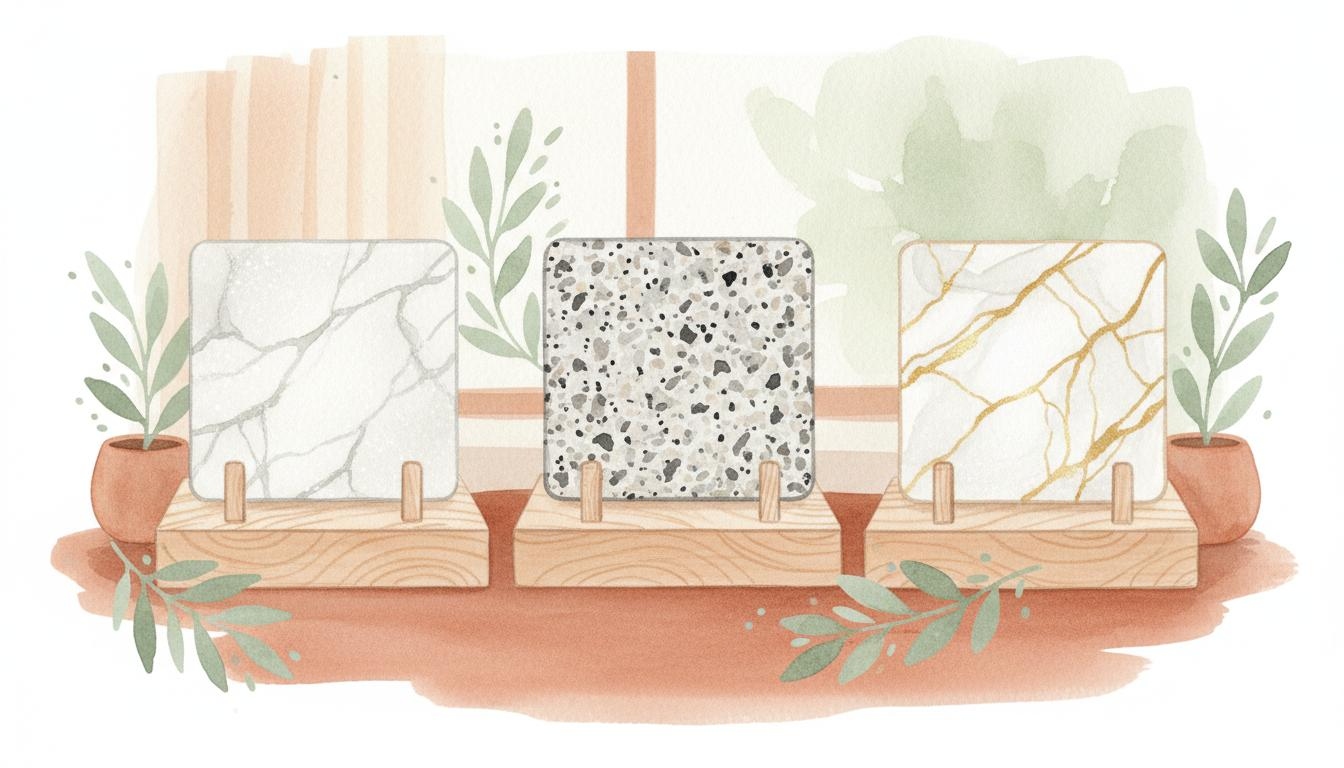
Granite and quartz both cost $50–$120 per square foot installed. The right choice depends on maintenance tolerance, heat resistance, and style. Here’s the head-to-head comparison.
The granite countertop vs quartz debate stops more kitchen remodels in their tracks than almost any other material decision. You’ve picked the cabinet color, settled on a layout, and now you’re staring at slab yards and showroom samples wondering which surface will live on your cabinets for the next 15 to 30 years. Both materials look premium. Both perform well. But they behave very differently in real kitchens. This guide breaks down the differences that actually matter — cost, upkeep, durability, and how each one fits your cooking habits — so you can choose with confidence and move on to the next decision.
What Granite and Quartz Actually Are
Before comparing performance, it helps to understand what you’re paying for.
Granite is natural stone. Miners quarry it directly from the earth, cut it into slabs, and polish the surface. No two slabs are identical. The veining, flecks, and color variation you see formed over millions of years. What arrives at your fabricator is literally a slice of rock. That uniqueness is part of the appeal — and part of the challenge, since your kitchen may require multiple slabs that can never match perfectly.
Quartz is engineered stone. Manufacturers combine roughly 90–95 percent crushed natural quartz with resins, polymers, and pigments, then press the mixture into slabs under intense heat and vibration. The result looks like stone but behaves more like a solid surface. Patterns are consistent from slab to slab, which makes matching large kitchens easier. Brands like Caesarstone, Cambria, and Silestone dominate the market, though dozens of options exist at varying price points.
This fundamental difference — one dug from a mountain, one cooked in a factory — drives almost every practical distinction that follows.
Granite Countertop vs Quartz: Installed Cost per Square Foot
For most homeowners, cost narrows the field quickly. Here’s what you can expect to pay for materials plus professional installation in typical US markets:
| Cost Tier | Granite (per sq ft installed) | Quartz (per sq ft installed) |
|---|---|---|
| Entry-level | $50–$65 | $60–$75 |
| Mid-range | $65–$90 | $75–$100 |
| Premium / exotic | $90–$120+ | $100–$120+ |
Entry-level granite includes common domestic varieties like Uba Tuba or Baltic Brown. Mid-range opens up more colors and finer grain patterns. Premium granites — exotic imports with dramatic veining or rare colors — can push well past $120 per square foot.
Entry-level quartz covers basic solid colors and simple patterns from budget-friendly brands. Mid-range quartz adds more convincing stone-like patterns and better-known brand names. Premium quartz mimics marble and other luxury stones with impressive realism.
What drives the final number: edge profile complexity, cutouts for sinks and cooktops, backsplash height, slab size (fewer seams with larger slabs), and your local labor market. A simple rectangular kitchen with one sink cutout costs far less to fabricate than a U-shaped layout with a cooktop cutout and an undermount farmhouse sink.
Regional note: Countertop prices vary significantly by location. Labor runs higher in major metro areas and on the coasts. Material availability also affects pricing — granite quarried closer to your region may cost less than an identical slab shipped cross-country. Always get at least three local quotes before committing.
For a broader look at how countertops fit into your total kitchen budget, see our kitchen countertop cost comparison and kitchen remodel cost by tier guides.
Durability and Stain Resistance
Both materials are tough. Neither scratches under normal kitchen use. But they fail differently when pushed past their limits.
Granite resists scratches and heat exceptionally well. It’s stone — you can set a hot pan on it briefly without damage, though repeated thermal shock can cause cracking over time. The real weakness is porosity. Granite absorbs liquids if left standing, especially lighter-colored varieties with more porous structures. Oil, wine, coffee, and tomato sauce can all leave stains if not wiped up promptly. The fix is sealing.
Most granite countertops need sealing once or twice per year. The test is simple: sprinkle water on the surface. If it beads up, the seal is intact. If it darkens and absorbs within a few minutes, it’s time to reseal. The process takes about an hour and costs $20–$40 in supplies. Skip it, and stains become a real risk.
Quartz is nonporous thanks to its resin content. It never needs sealing. Red wine, coffee, and oil sit on the surface rather than soaking in, making it genuinely stain-proof under normal conditions. However, the resin binder also makes quartz slightly less scratch-resistant than granite. Knives won’t mar it easily, but aggressive cutting directly on the surface can leave marks over time. Use a cutting board — a habit you should follow with any countertop material.
Heat, Scratch, and Acid Sensitivity
Kitchens generate heat, sharp objects, and acidic spills. Here’s how each surface holds up:
Heat resistance: Granite wins. You can pull a 500°F cast-iron skillet from the oven and set it on granite without issue — though extreme or sustained heat can theoretically crack any stone. Quartz is more vulnerable. The resin in quartz begins to degrade around 300°F, and sudden temperature changes can cause discoloration or cracking. Always use trivets or hot pads with quartz. If you regularly set hot pots directly on the counter, granite forgives that habit better.
Scratch resistance: Both score highly. Granite ranks about 6–7 on the Mohs hardness scale. Quartz sits around 7. In practice, neither scratches from normal kitchen activities. Both will dull knives over time rather than show damage themselves. The difference is academic for most homeowners.
Acid and chemical sensitivity: Quartz holds up better against acids like lemon juice and vinegar, which can etch some granite varieties — particularly darker, calcium-rich stones. Harsh chemicals and solvents can damage quartz resins, so avoid abrasive cleaners and anything containing methylene chloride. Granite tolerates a wider range of cleaners but still prefers pH-neutral products to preserve the sealer.
Maintenance: What You’re Signing Up For
The maintenance gap between these materials is larger than the durability gap.
Granite demands attention. Seal it once or twice yearly. Wipe spills promptly, especially acidic or oily liquids. Use pH-neutral cleaners exclusively if you want the sealer to last. Neglect the routine, and you’ll eventually deal with stains that require professional poulticing or even refinishing.
Quartz demands almost nothing. Warm soapy water and a soft cloth handle daily cleanup. No sealing schedule, no stain anxiety, no special cleaner required. The convenience factor explains why busy families and reluctant DIYers often gravitate toward quartz despite the slightly higher entry price.
If low maintenance ranks high on your priority list, quartz justifies its premium for the time and hassle it saves over a decade or more of ownership.
Resale Value: Does One Material Sell Better?
Both granite and quartz signal “updated kitchen” to buyers, and both add perceived value compared to laminate or tile. The National Association of Home Builders consistently lists quality countertops among the features buyers notice first.
Granite has longer name recognition. For decades, it was the gold standard in upscale kitchens. Older buyers especially associate granite with luxury.
Quartz has momentum. According to industry surveys, quartz has overtaken granite in new construction and remodel popularity over the past several years. Younger buyers increasingly prefer quartz for its clean look, consistent patterns, and low-maintenance reputation. Some buyers specifically seek quartz and view granite as dated.
The honest answer: either material supports resale value in a kitchen that otherwise shows well. The bigger risk is choosing a polarizing color or pattern — a neon granite or an aggressively trendy quartz — that buyers remember for the wrong reasons. Neutral tones in either material perform best at resale.
Side-by-Side Comparison: Granite vs Quartz
| Attribute | Granite | Quartz |
|---|---|---|
| Composition | Natural quarried stone | Engineered (90–95% quartz + resin) |
| Average installed cost | $50–$120 / sq ft | $60–$120 / sq ft |
| Scratch resistance | Excellent (6–7 Mohs) | Excellent (~7 Mohs) |
| Heat resistance | Excellent | Moderate (use trivets) |
| Stain resistance | Good when sealed | Excellent (nonporous) |
| Sealing required | Yes, 1–2x per year | Never |
| Daily maintenance | Wipe spills quickly, pH-neutral cleaners | Warm soapy water |
| Pattern consistency | Unique, varies slab to slab | Uniform, consistent batch to batch |
| Color availability | Wide natural range; rare colors cost more | Nearly unlimited; mimics marble and stone |
| Seam visibility | More visible on busy patterns | Easier to hide on solid colors |
| Repairability | Chips can often be filled and polished | Chips harder to repair seamlessly |
| Lifespan | 30+ years with proper care | 25–30 years (resin may yellow slightly over time) |
| Resale appeal | Strong; widely recognized | Strong; preferred by many newer buyers |
| Best for | Cooks who use hot pots, lovers of natural variation | Busy households wanting zero maintenance |
How to Decide: If You Want X, Choose Y
Still torn? This framework usually breaks the tie:
Choose granite if: you love the idea of a one-of-a-kind natural surface, you regularly set hot cookware directly on counters, you don’t mind an annual sealing ritual, or you found a slab pattern that speaks to you in a way no engineered surface can replicate. Granite rewards homeowners who appreciate natural imperfection and don’t mind a little upkeep in exchange for character.
Choose quartz if: you want the easiest possible maintenance, you prefer a clean consistent look without variation between slabs, your kitchen layout requires multiple pieces that need to match, or you cook with acidic ingredients frequently and worry about etching. Quartz fits modern aesthetics and busy lifestyles where maintenance falls to the bottom of the priority list.
Either works if: your primary concern is durability and resale value. Both check those boxes. In that case, choose based on the specific color and pattern you love — because you’ll look at it every day for years.
What About Butcher Block and Marble?
Granite and quartz dominate the market, but two alternatives deserve mention for homeowners exploring all options.
Butcher block brings warmth and a functional cutting surface to kitchens at a lower price point — typically $40–$80 per square foot installed. Maple and oak are common choices. The tradeoff is significant maintenance: regular oiling, sensitivity to water around sinks, and vulnerability to scratches and burns. Many homeowners install butcher block on an island while using stone on perimeter counters for a mixed-material look. It’s a great choice for bakers and those who want an organic, Scandinavian-inspired aesthetic — as long as you accept the upkeep commitment.
Marble remains the dream material for bakers and lovers of classic European kitchen design. Carrara and Calacatta varieties offer unmistakable beauty. The problem is practicality. Marble scratches easily, etches from any acidic contact (lemons, tomatoes, vinegar), and stains readily. It demands the maintenance attention of granite multiplied several times over. Expect $70–$150 per square foot installed. Most designers reserve marble for baking stations, powder room vanities, or homes where beauty genuinely trumps practicality. If you want the look of marble without the headaches, several quartz manufacturers now offer convincing marble-look patterns at a similar or lower price point.
FAQ: Granite vs Quartz Countertops
Which costs more, granite or quartz?
The entry point for granite runs slightly lower — around $50 per square foot installed versus $60 for quartz. At the premium end, both materials top out around $120 per square foot. Your final price depends more on the specific slab, brand, edge detail, and local labor rates than on which material you choose.
Does quartz really never need sealing?
Correct. Quartz is nonporous because of the resin that binds the crushed stone together. Liquids cannot penetrate the surface, so staining is not a concern and sealing serves no purpose. This is one of quartz’s biggest practical advantages over granite.
Can I put a hot pan on quartz?
You shouldn’t. Quartz can withstand brief contact with warm items, but sustained heat above roughly 300°F damages the resin binders and can cause permanent discoloration or cracking. Always use trivets or hot pads. Granite handles heat far more forgivingly, though even granite benefits from trivet use over the long term.
Does granite harbor bacteria?
Properly sealed granite presents no greater bacterial risk than any other hard countertop surface. The sealant creates a barrier that prevents liquids — and the bacteria they might carry — from penetrating the stone. Routine cleaning with soap and water keeps any countertop hygienic. If food safety is a top concern, quartz’s nonporous surface offers additional peace of mind.
Which looks better, granite or quartz?
Beauty is subjective. Granite offers unique, natural patterns that cannot be replicated — dramatic movement, one-of-a-kind mineral deposits, and organic variation. Quartz offers consistency, cleaner lines, and the ability to mimic marble or other stones without their maintenance demands. Visit slab yards and showrooms with physical samples rather than relying on photos. The slab you choose matters more than the material category.
Can quartz countertops go outside?
Manufacturers generally do not recommend outdoor quartz installation. Prolonged UV exposure can degrade the resin binders and cause yellowing or discoloration over time. Granite performs far better outdoors and is the clear choice for outdoor kitchens, barbecue stations, or poolside bars.
How long do granite and quartz countertops last?
With proper care, granite lasts 30 years or more. Quartz typically performs well for 25–30 years, though the resin component may show slight yellowing near the end of that lifespan, especially in kitchens with strong sun exposure. Both outlast most homeowners’ tenure in a given home.
Can I install either material myself to save money?
Countertop fabrication and installation require specialized equipment — bridge saws, CNC routers, and polishing tools — plus the skill to template, cut, and seam large, heavy slabs. DIY installation is not practical for either material. You can reduce costs by sourcing your own slabs or choosing simpler edge profiles, but leave the cutting and installation to professionals. A bad seam or cracked slab costs far more than professional labor would have.
We may earn a commission if you purchase through links on this page, at no extra cost to you.
Costs and prices in this guide reflect national US averages based on industry data and contractor estimates. Actual prices in your area may differ. We recommend obtaining at least three local quotes before making any material commitment.
Planning a full kitchen overhaul? Our IKEA kitchen cost and review guide breaks down what homeowners actually spend on a popular budget-friendly option.