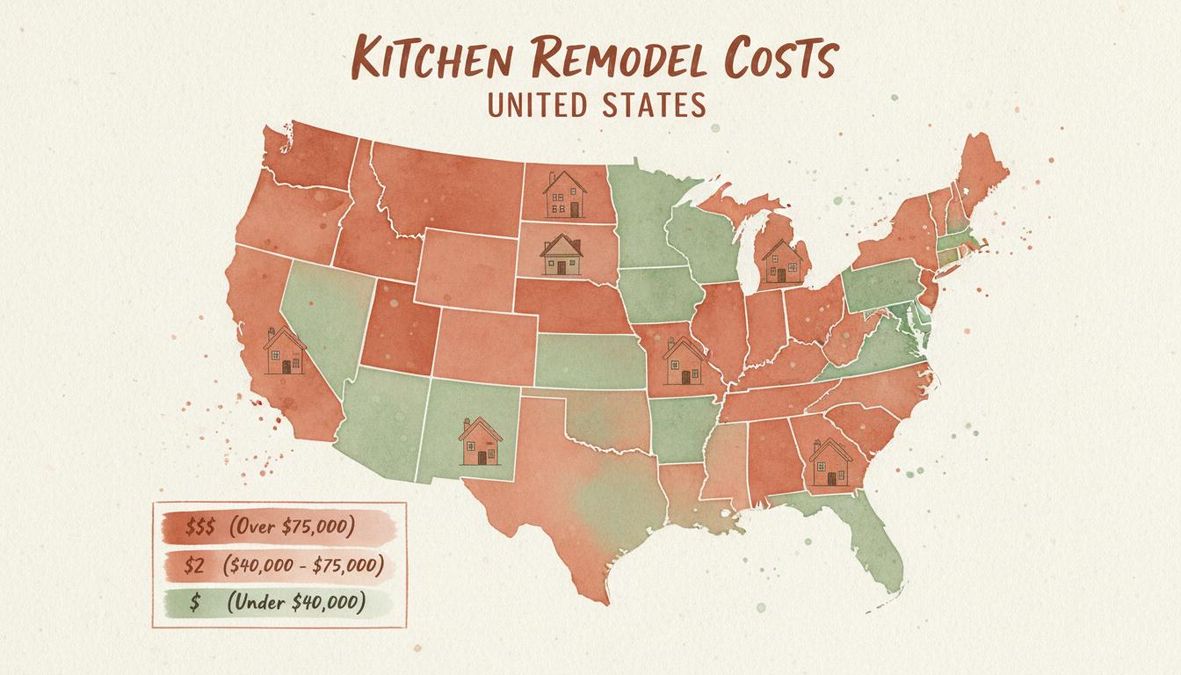
A kitchen remodel that costs $28,000 in Columbus, Ohio runs $48,000 in San Francisco for identical materials and scope. Labor rates, material delivery costs, permit fees, and contractor availability all vary dramatically by location — and these differences add up fast.
We’ve compiled cost data from contractor quotes, HomeAdvisor project reports, and Bureau of Labor Statistics wage data to create this 50-state breakdown. Use it as a starting point, then get local quotes to narrow your range. For a personalized estimate based on your specific kitchen size and tier preference, use our kitchen remodel cost calculator.
Regional Overview
Before diving into individual states, here’s how US regions compare at a glance:
| Region | Average Mid-Range Cost | Labor Cost Index | Primary Cost Driver |
|---|---|---|---|
| Pacific | $45,000–$75,000 | +45–60% | High labor rates, strict codes, material costs |
| Mountain | $35,000–$55,000 | +10–25% | Varies widely by metro vs. rural |
| West South Central | $30,000–$50,000 | -10% to +5% | Strong contractor competition keeps prices moderate |
| West North Central | $28,000–$48,000 | -10% to +5% | Moderate labor, lower material costs |
| East North Central | $30,000–$50,000 | Baseline | Near-national average |
| East South Central | $25,000–$45,000 | -15% to -5% | Lower labor rates |
| South Atlantic | $32,000–$52,000 | -5% to +15% | Wide variation: FL/GA lower, DC/MD higher |
| Middle Atlantic | $38,000–$60,000 | +20–35% | High labor in NY/NJ, moderate in PA |
| New England | $40,000–$65,000 | +25–40% | High labor, older housing stock increases complexity |
50-State Kitchen Remodel Cost Table
All figures represent mid-range remodel costs (semi-custom cabinets, quartz countertops, quality appliances, minor layout changes) for a typical 10×10 kitchen. Budget and upscale remodels scale proportionally.
| State | Cost Range (Low–High) | Labour Index | Permit Requirements |
|---|---|---|---|
| Alabama | $24,000 – $42,000 | Below average | Required for structural, electrical, plumbing |
| Alaska | $42,000 – $68,000 | Very high | Required; varies by borough |
| Arizona | $30,000 – $48,000 | Near average | Required; Phoenix/Mesa have specific requirements |
| Arkansas | $24,000 – $40,000 | Below average | Varies by municipality |
| California | $48,000 – $78,000 | +55% | Strict; Title 24 energy code compliance required |
| Colorado | $35,000 – $56,000 | +15% | Required in most jurisdictions |
| Connecticut | $40,000 – $62,000 | +30% | Required; Home Improvement Contractor license required |
| Delaware | $32,000 – $50,000 | Near average | Required statewide |
| Florida | $28,000 – $48,000 | Near average to slightly above | Required; Miami-Dade has hurricane codes |
| Georgia | $28,000 – $46,000 | Near average | Required in metro Atlanta; varies elsewhere |
| Hawaii | $50,000 – $80,000 | +60% | Required; shipping increases material costs |
| Idaho | $28,000 – $44,000 | Slightly below | Varies by city |
| Illinois | $32,000 – $52,000 | Baseline | Required; Chicago has additional requirements |
| Indiana | $28,000 – $46,000 | Slightly below | Varies by locality |
| Iowa | $26,000 – $44,000 | Below average | Required in larger cities |
| Kansas | $26,000 – $44,000 | Below average | Varies by city |
| Kentucky | $26,000 – $44,000 | Below average | Varies by county |
| Louisiana | $26,000 – $44,000 | Slightly below | Required; New Orleans has historical district rules |
| Maine | $35,000 – $55,000 | +20% | Required; older homes may need code upgrades |
| Maryland | $36,000 – $58,000 | +20% | Required statewide |
| Massachusetts | $42,000 – $66,000 | +35% | Strict; State Building Code plus local amendments |
| Michigan | $28,000 – $48,000 | Near average | Required; Detroit has specific rehab requirements |
| Minnesota | $30,000 – $50,000 | Near average | Required; energy code compliance |
| Mississippi | $24,000 – $42,000 | Below average | Varies by municipality |
| Missouri | $28,000 – $46,000 | Near average | Varies by city/county |
| Montana | $30,000 – $48,000 | Slightly above (limited contractor pool) | Varies; limited contractors in rural areas |
| Nebraska | $26,000 – $44,000 | Below average | Required in Omaha/Lincoln |
| Nevada | $32,000 – $52,000 | +10% | Required; Clark County has specific codes |
| New Hampshire | $36,000 – $56,000 | +20% | Required; State Fire Code applies |
| New Jersey | $40,000 – $64,000 | +30% | Strict; NJ Home Improvement Contractor registration required |
| New Mexico | $28,000 – $46,000 | Near average | Required in Albuquerque/Santa Fe |
| New York | $45,000 – $72,000 | +50% | Strict; NYC has additional requirements |
| North Carolina | $28,000 – $46,000 | Near average | Required statewide |
| North Dakota | $28,000 – $46,000 | Near average | Limited contractor availability |
| Ohio | $28,000 – $46,000 | Slightly below | Varies by city |
| Oklahoma | $24,000 – $42,000 | Below average | Required in major metros |
| Oregon | $38,000 – $60,000 | +25% | Required; Oregon Reach Code may apply |
| Pennsylvania | $30,000 – $50,000 | Near average | Varies by municipality |
| Rhode Island | $38,000 – $60,000 | +25% | Required; uniform state code |
| South Carolina | $26,000 – $44,000 | Slightly below | Required in coastal zones |
| South Dakota | $26,000 – $44,000 | Below average | Varies by city |
| Tennessee | $26,000 – $44,000 | Slightly below | Required in Memphis/Nashville/Knoxville |
| Texas | $28,000 – $48,000 | Near average | Varies by city; Houston/Austin/Dallas differ |
| Utah | $30,000 – $48,000 | Near average | Required; Salt Lake County specific codes |
| Vermont | $34,000 – $54,000 | +20% | Required; strict energy codes |
| Virginia | $32,000 – $52,000 | +10% | Required statewide; varies by locality |
| Washington | $40,000 – $64,000 | +30% | Required; Seattle energy code is stricter than state |
| West Virginia | $24,000 – $42,000 | Below average | Varies by county |
| Wisconsin | $28,000 – $48,000 | Near average | Required; uniform dwelling code |
| Wyoming | $28,000 – $46,000 | Near average | Limited contractor pool |
The 5 Most Expensive States
1. Hawaii — $50,000–$80,000
Everything costs more in Hawaii — shipping adds 15–25% to material costs, and the limited pool of licensed contractors commands premium rates. High demand for renovation services and strict building codes (especially coastal zones) push costs to the top of the national range. Any kitchen remodel involving structural changes or electrical panel upgrades faces additional inspection requirements.
2. California — $48,000–$78,000
California’s costs vary significantly by metro — San Francisco and Los Angeles sit at the high end, Sacramento and Fresno closer to the middle. Title 24 energy code compliance adds costs (LED lighting, efficient appliances), and many municipalities require extensive permitting. The silver lining: California’s high home values mean even expensive remodels often make financial sense proportionally.
3. New York — $45,000–$72,000
New York City drives the state’s average skyward — Manhattan and Brooklyn kitchen remodels routinely exceed $60,000 for mid-range work due to labor costs, logistics (getting materials into apartments), and co-op/condo board requirements. Upstate New York (Buffalo, Rochester, Albany) is significantly more affordable, closer to national average.
4. Massachusetts — $42,000–$66,000
Massachusetts combines high labor rates with older housing stock — many kitchens in Boston-area homes predate modern building codes, requiring electrical and plumbing updates that add $3,000–$8,000 to any cosmetic remodel. The state’s uniform building code is well-enforced, meaning permits and inspections are non-negotiable.
5. Alaska — $42,000–$68,000
Similar to Hawaii, Alaska’s geographic isolation drives up material costs — many items must be barged or flown in. The limited contractor pool (especially outside Anchorage) means less competition and higher rates. Short construction seasons can create scheduling bottlenecks that extend timelines and increase costs.
The 5 Most Affordable States
1. Mississippi — $24,000–$42,000
Mississippi consistently ranks among the most affordable states for kitchen remodeling. Low labor rates, reasonable material costs, and a competitive contractor market keep prices down. Rural areas can be even more affordable, though contractor availability may limit options outside Jackson, Gulfport, and Hattiesburg.
2. West Virginia — $24,000–$42,000
West Virginia’s lower cost of living translates directly to lower remodeling costs. Labor rates run 15–20% below national average, and contractors are plentiful relative to demand. The primary variable is rural access — homes in remote areas may face higher travel charges from contractors.
3. Alabama — $24,000–$42,000
Alabama offers strong value across the Birmingham, Huntsville, and Mobile metros. A robust building industry and moderate labor costs create competitive pricing. Some rural counties have limited permitting requirements, which can reduce project overhead — though we still recommend pulling permits for any electrical or plumbing work.
4. Arkansas — $24,000–$40,000
Arkansas homeowners enjoy some of the lowest kitchen remodel costs in the country, particularly in Little Rock, Fayetteville, and Fort Smith. The state’s growing population has attracted more contractors in recent years, increasing competition and keeping prices reasonable. Rural areas remain very affordable.
5. Oklahoma — $24,000–$42,000
Oklahoma City and Tulsa offer excellent remodeling value — low labor costs, available materials, and a healthy contractor market. The state’s relatively lenient building codes (compared to coastal states) reduce compliance costs. Tornado-resistant construction requirements don’t significantly affect kitchen remodeling costs.
Why Costs Vary So Much by State
Labor rates are the biggest driver. A general contractor in Manhattan charges $120–$180 per hour. The same skill in Jackson, Mississippi runs $45–$65 per hour. Over a 6-week remodel involving multiple trades, that difference compounds into tens of thousands of dollars.
Material delivery affects costs in remote and island states. Hawaii and Alaska face significant shipping premiums. Even within the lower 48, rural areas may lack local distributors for premium materials, requiring freight charges that urban homeowners don’t face.
Permit and compliance costs vary widely. California’s Title 24 energy code, New York City’s extensive inspection requirements, and Massachusetts’ strict building codes all add cost in the form of compliance work, permit fees, and inspection delays. States with more permissive building codes see lower project overhead.
Contractor availability creates local market effects. Booming markets with lots of construction activity (Austin, Nashville, Denver) sometimes see higher prices due to demand exceeding supply. Markets with slower growth often have contractors competing aggressively for work.
Housing stock age matters too. Older homes in New England and the Mid-Atlantic often require code upgrades (electrical, plumbing, structural) that newer homes in the South and West don’t need. A “cosmetic” kitchen remodel in a 1920s Boston home is rarely just cosmetic.
Getting an Accurate Local Quote
State averages are useful for initial planning, but your actual cost depends on your specific kitchen, your exact location within the state, and the contractors you interview. Here’s how to get accurate local pricing:
Get three written quotes from licensed contractors in your area. Each quote should include detailed line items — not just a single number. Compare scope carefully to ensure you’re evaluating similar work.
Check contractor licensing through your state’s contractor board. Requirements vary: some states license at the state level, others delegate to counties or cities. Our guide on how to choose a kitchen contractor covers vetting in detail.
Ask about permit costs upfront. In some jurisdictions, permit fees are negligible ($100–$300). In others, they run $1,000+ and require multiple inspections. Your contractor should include permit costs in their estimate — if they don’t, ask why.
Consider your home’s specific conditions. A 1950s home with original electrical will need a panel upgrade ($1,500–$3,000). A home with plaster walls requires different repair techniques than drywall. These factors affect cost more than state averages can capture.